Our bow and adaptive rigs
LevelBow P1: PVC pipe, under $50.
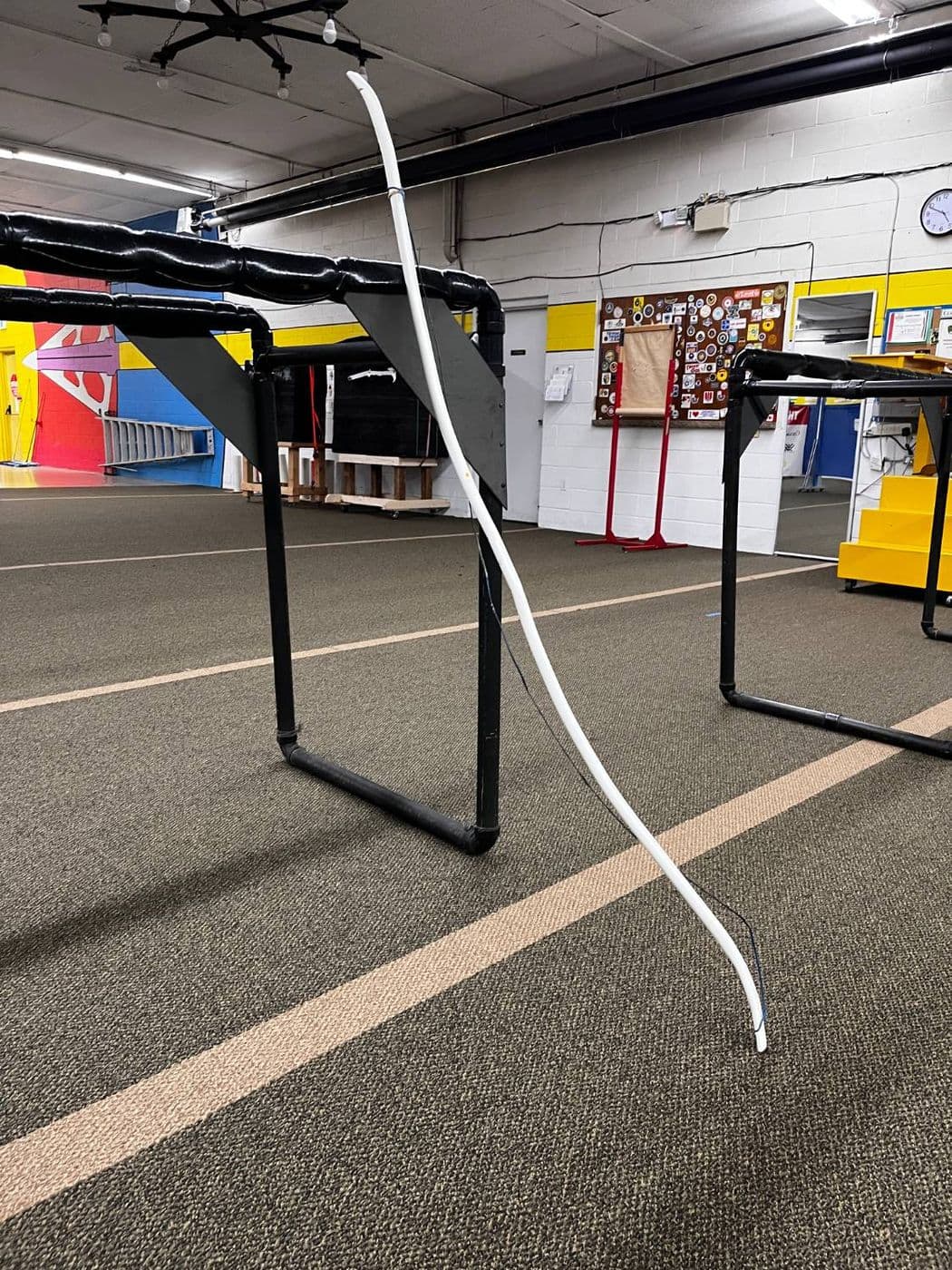
P1 is our first PVC bow. It’s ½ in Schedule 40 PVC pipe. We heat the tips, bend them into a recurve, and a nylon string holds the bend. It draws 6 to 7 lb, depending on the archer’s draw length.
It’s for archers with a physical or cognitive disability, or limited strength, who need something lighter than a standard beginner bow. It’s fun to use, and it’s good practice too.
We tested P1 and our three VI rigs for draw weight and accessibility, measured each one, and compared them with the bows in our table for safety, durability and efficiency. We only list numbers we’ve measured.LevelBow is sport equipment. We make no medical or therapy claims.
- Draw weight
- 6–7 lb
- Cost to build
- Under $50
- Weight
- 390 g
- Length
- 64 in
- Draw length
- 24–31 in
- Material
- ½ in Schedule 40 PVC pipe
- String
- Nylon
- Shape
- Recurve
Under $50
To build a P1
$200+
An adult-size 12 lb beginner bow
How we got to P1
Why we built it the way we did.
What we needed
A bow under 12 lb, for archers with a physical or cognitive disability or limited strength. An adult-size 12 lb beginner bow costs $200 or more.
What we compared
Homemade stick bows, recurves, longbows, a Japanese bow and a fibreglass bow. They’re all in the table below. Our homemade stick bows were too fragile and could break, and they only drew to 20 in. P1 needed a 24 to 31 in draw.
Why PVC
It’s cheap, and it’s light. P1 weighs 390 g, a little under the lightest other bow we weighed (420 g). Heat softens the pipe, so we can bend it with a heat gun.
Why a recurve
We bent the tips into a recurve to keep the pipe from snapping. A recurve should also send more of each draw into the arrow. We checked efficiency against the other bows in our table, but we haven’t measured the energy directly.
What we got
A bow that draws 6 to 7 lb, depending on draw length, and costs under $50 to build, with a free guide so anyone can make one. Next, we’re planning P2: a 20 lb version for adults new to archery.
Where P1 sits
Draw weight in pounds. We wanted P1 under 12 lb.
P1 draws 6 to 7 lb, depending on draw length, under our 12 lb ceiling. P2 is planned at 20 lb. The other bows we compared draw from 6 to 25 lb. The full list is in the table below.
The bows we compared
| Bow | Type | Est. cost | Draw weight | Weight | Length |
|---|---|---|---|---|---|
| Homemade stick bow A | Stick bow | $2 | 6 lb | – | 34 in |
| Homemade stick bow B | Stick bow | $20 | 10 lb | 500 g | 54 in |
| Sarmat Archery Hankyu | Japanese | $250 | – | 420 g | 71 in |
| Geologic | Recurve | $70 | 20 lb | 420 g | – |
| Rolan Snake II | Recurve | $100 | 22 lb | 610 g | 50 in |
| Mountain Archery Symphony | Longbow | $500 | 25 lb | 640 g | 68 in |
| Mountain Archery Sniper | Longbow | $500 | 25 lb | 640 g | 68 in |
| LevelBow P1 | Recurve (PVC pipe) | Under $50 | 6–7 lb | 390 g | 64 in |
| Bear Archery Crusader | Fibreglass | $100 | 10–20 lb | – | 51 in |
| Galaxy Crescent | Recurve | $361.60 | 14 lb | 1,333 g | 68 in |
Costs are estimates. A dash means we didn’t record it. The Bear Archery Crusader is a youth-size bow.
What the research says, and what it doesn’t
A bow shouldn’t ask for more strength, coordination or focus than the skill you’re learning. That’s the idea behind P1. Here’s what published research backs up, and what it doesn’t yet.
- Supported
Adapted equipment helps people take part in para archery.
World Archery allows adapted releases, stools and wheelchairs so competition is fair. Archery Canada classifies para archers by range of movement, flexibility, strength and balance.[4][5]
- Supported
Coordination and thinking skills affect each other.
A review of 100 studies on developmental coordination disorder found the biggest gaps in motor learning and in combining thinking with movement.[1]
- Some evidence
Sensory processing affects whether people take part.
A review of 7 studies linked sensory processing to everyday participation for autistic children. The studies were medium to low quality, and the authors call for better ones.[2]
- Supported
Adapted, technology-based activities can help people with developmental disabilities be more active.
A review of 16 studies with 604 people found digital tools improved physical activity and fitness.[3]
- Our hypothesis
Lowering the physical load makes archery easier to take part in.
It makes sense, but we didn’t find a study that tests it in archery, so we treat it as a hypothesis.
- Not shown
An ultra-light bow reduces cognitive or sensory overload.
We didn’t find a study that tests this, so we don’t claim it.
- Not supported
One bow works for everyone with a disability.
Needs vary from person to person. We fit each setup to the archer.
So we don’t claim P1 changes any outcome. We fit each setup to the person and test what helps.
Sources
- [1] Subara-Zukic, E., et al. (2022). Behavioral and neuroimaging research on developmental coordination disorder (DCD): a combined systematic review and meta-analysis of recent findings. Frontiers in Psychology, 13, 809455. doi.org/10.3389/fpsyg.2022.809455
- [2] Ismael, N., et al. (2018). Relationship between sensory processing and participation in daily occupations for children with autism spectrum disorder. American Journal of Occupational Therapy. doi.org/10.5014/ajot.2018.024075
- [3] Corey, J., et al. (2025, online 2024). Digital motor intervention effects on physical activity performance of individuals with developmental disabilities: a systematic review. Disability and Rehabilitation. doi.org/10.1080/09638288.2024.2398148
- [4] World Archery. Para archery. www.worldarchery.sport/sport/disciplines/para-archery
- [5] Archery Canada. Para-archery classification. archerycanada.ca/our-para-program/para-archery-classification/
How we make a P1
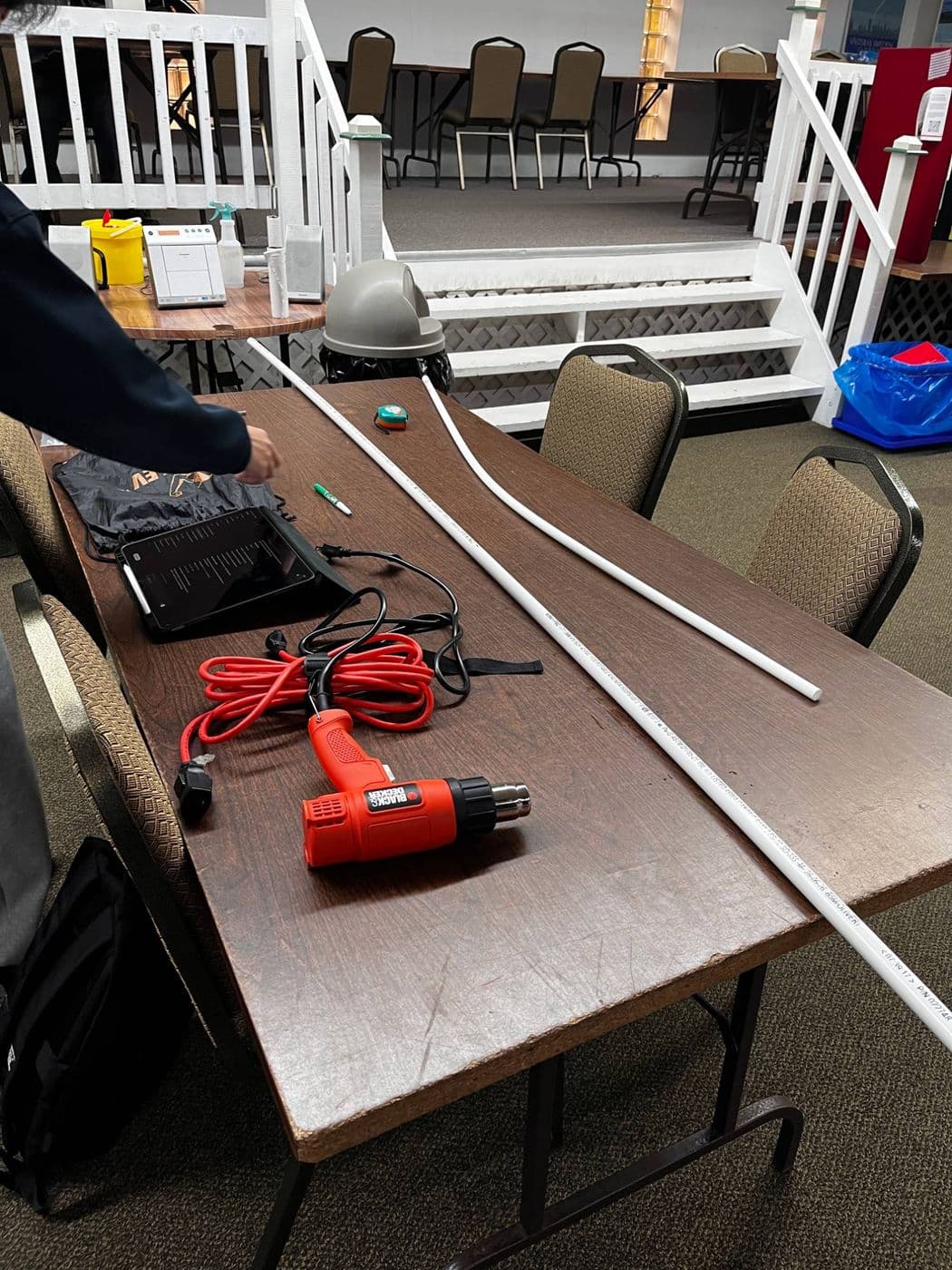
01
The parts
½ in Schedule 40 PVC pipe, a heat gun, a tape measure and a marker.
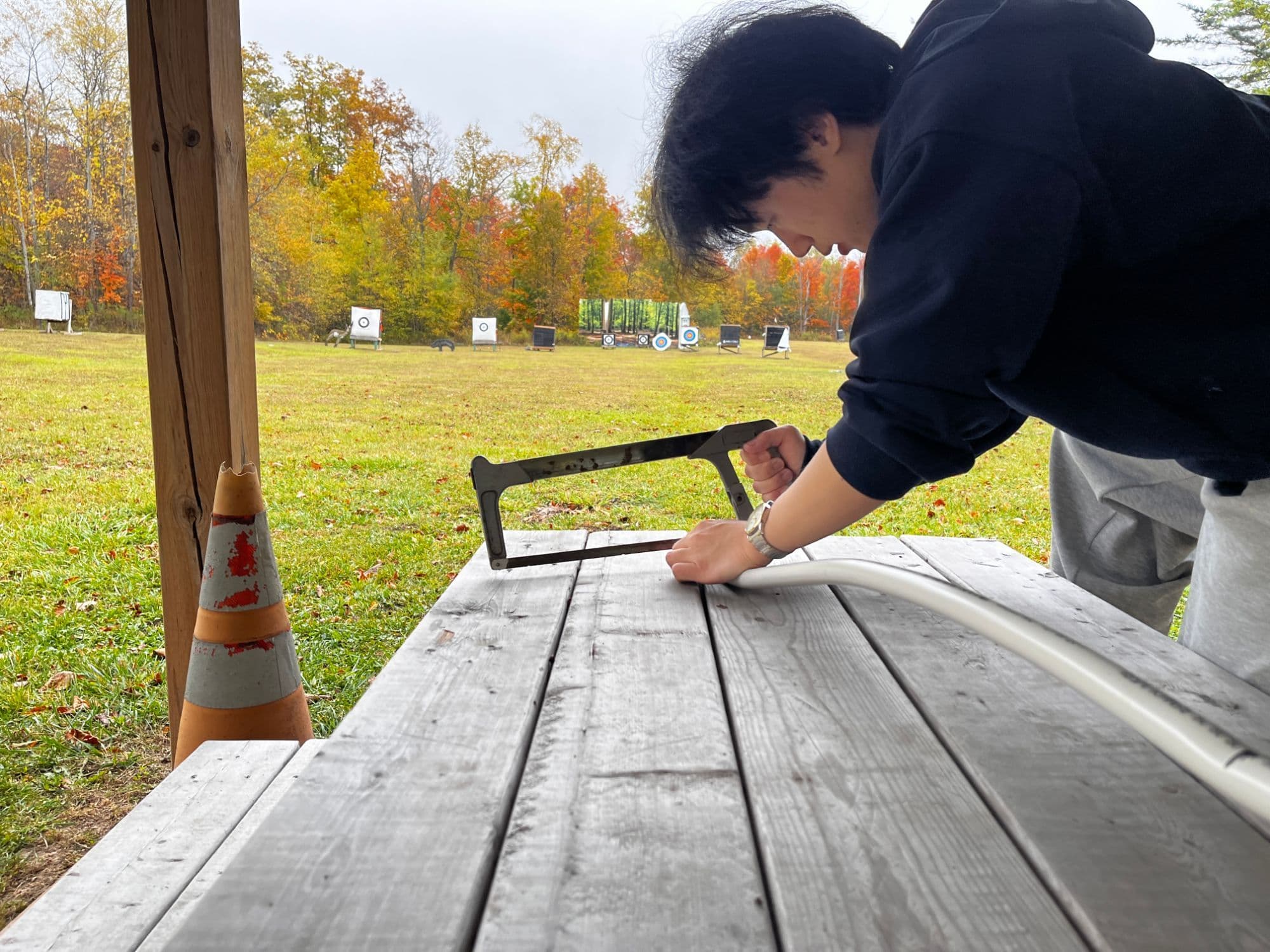
02
Cut it
We cut a 68 in stick from a 10 ft pipe with a hacksaw.
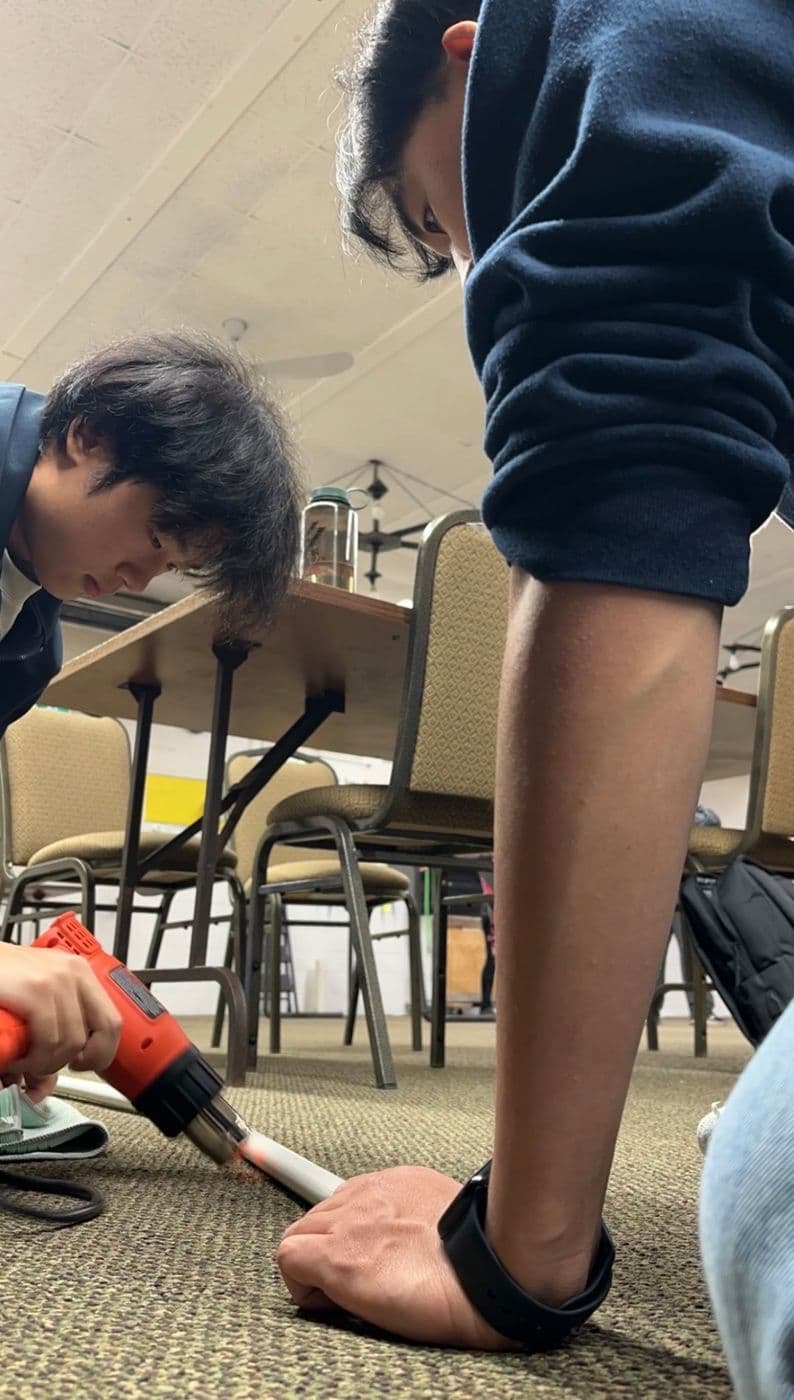
03
Heat and bend
The heat gun softens the ends so we can bend them into a recurve. If you try it, wear heat-resistant gloves and work somewhere with good airflow.
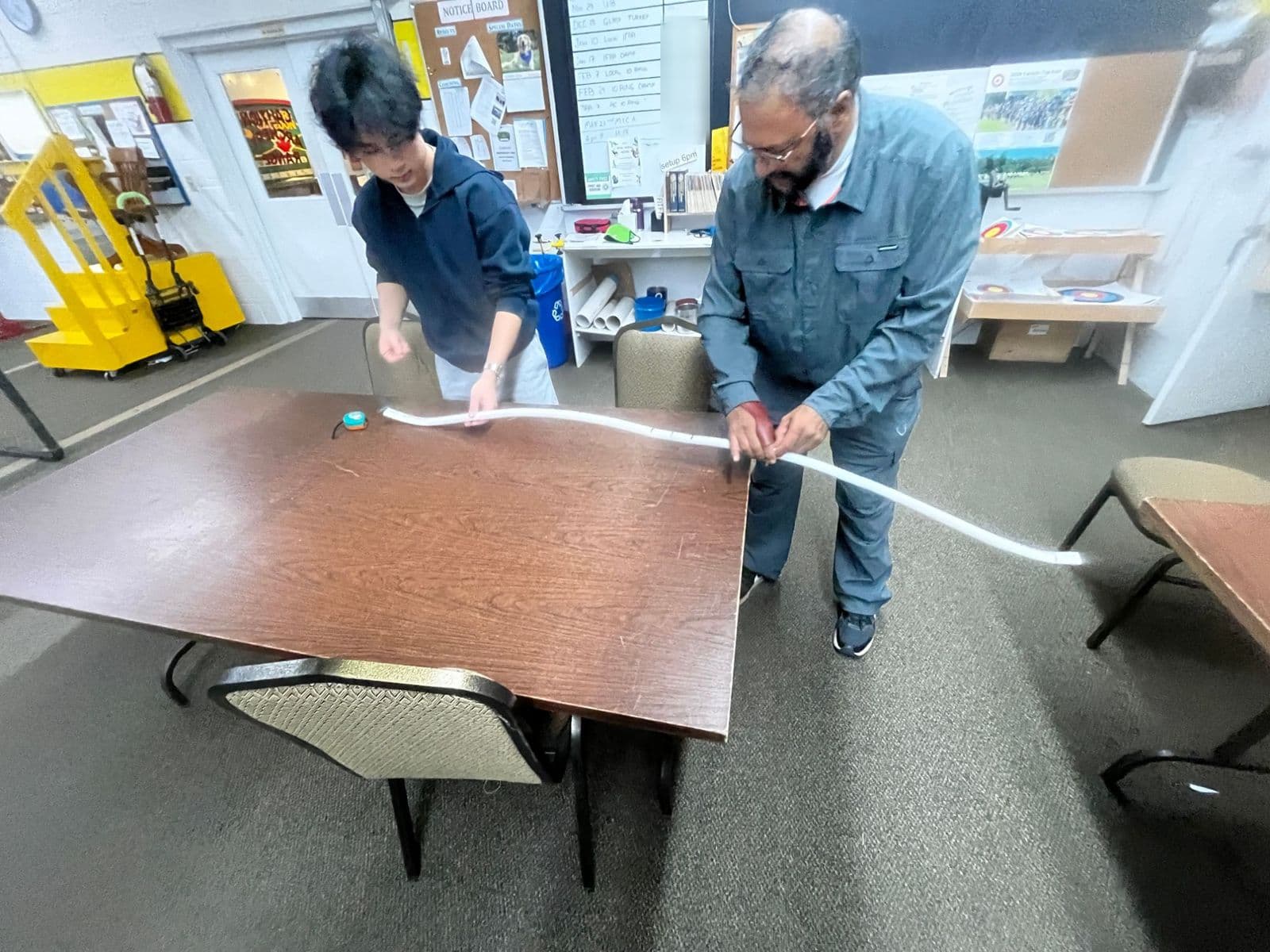
04
Check the curve
Then we check the shape on the table.
05
String it
A 64 in nylon string holds the bend. That’s P1.
Adaptive rig · visually impaired (VI)
Aiming by feel
We designed and built three of these rigs by hand, and rebuilt all three after getting the foot placements wrong the first time.
Build your own rigAdaptive rig · physically impaired
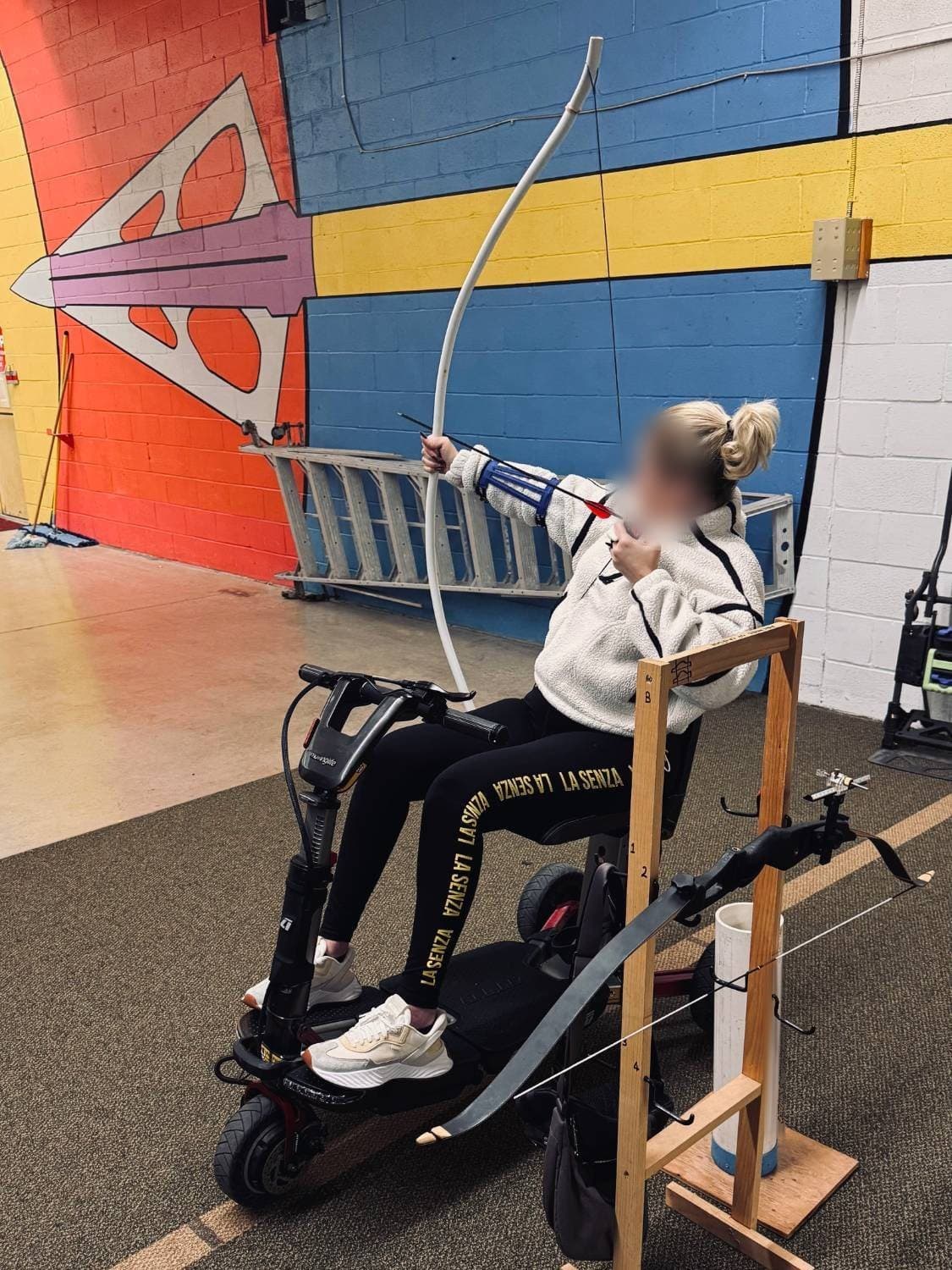
Bow supports and seated setups
We don’t make fibreglass limbs
A fibreglass limb that comes apart can throw glass fibre at face height. We buy those, or have a bowyer make them to a written spec. P1 is plain PVC pipe, not layered fibreglass. Check it for cracks or white stress marks before every session, and retire it if you find any.
We never build draw-holding releases
Anything that holds the string under tension and then lets it go must be commercial and supervised, or we don’t use it.
Built to standard
Built to published standards
World Archery, Rulebook Book 5 (Para Archery)
The binding rules our VI adaptations are built to, tactile sights, blindfolds, foot locators and spotters. We also use World Archery’s Adaptive Equipment Resource Guide (v1.1, 2023) for interpretation.
Open the sourceUSA Archery, Adaptive Archery Instruction Manual (2nd ed., 2018)
A free public resource developed with Disabled Sports USA, covering adaptive equipment and teaching adaptations, a supplement to Level 1 Instructor certification.
Open the source